How to Track a County Meeting Proposal from First Paper to Next Action
Track a county meeting proposal through agendas, reports and follow-up papers so you can tell what is being considered and what action remains outstanding.

You spot a new agenda item about a footpath you use, but the report only says that officers will return with options. A county meeting proposal can appear in several papers before anyone acts. The most useful clue is often not the debate itself, but the next action the paperwork assigns.
Rather than treating every document as a vote on the same question, read them as a chain of tasks. An agenda sets the meeting’s purpose; a report supplies material for that purpose; a later paper may answer an outstanding request. This approach helps you see where the work has reached without assuming that a mention means approval.
Follow the document chain
Start with the agenda and note the meeting date, item number and title. Open the linked report, then check whether it is marked for information, discussion or a decision. These labels are useful clues, though the wording of the requested action matters more.
In the report, look for the section that says what members are being asked to do. They might be asked to note information, request further work, choose between options or refer an issue elsewhere. Each request creates a different route through the council’s paperwork.
Next, check the minutes for that item. They record what the meeting did, which may differ from the report’s suggested action. If the minutes ask for a revised plan or further information, the next useful document is likely to be the response, not a search for an approval that has not yet been requested.
Keep a simple note of the item title and date. It makes matching later reports much easier when the wording changes.
Read the next-action clues
Follow-up language can reveal whether work is moving, paused or being redirected. “Report back” points to another paper; “refer to” sends the matter to a named body; “defer” means the meeting has put off a decision or discussion. Check the surrounding words for who is expected to act and what they have been asked to provide.
Use the record itself to decide what to look for next:
- Check for a report-back request. If the minutes name a report or review, look for a later agenda with a matching subject; if none appears, ask democratic services whether the work is still pending.
- Check whether the item was referred elsewhere. If another committee or body is named, search its agendas; if no destination is stated, ask which body is expected to take it up.
- Check for a deferral reason. If members requested information or consultation, look for that material in later papers; if no reason or next action is recorded, ask the clerk what follow-up was agreed.
- Check for a named officer or service. If responsibility is assigned, search later reports from that service; if responsibility is unclear, ask who owns the next action.
- Check whether the minutes say “noted”. If the item was only noted, do not treat that wording as approval; if you need to know whether any action followed, search for a separate decision or follow-up item.
- Check for a stated condition. If further work depends on consultation, consent or another decision, look for the result of that condition; if it remains unresolved, describe the matter as pending rather than complete.
These are reading cues, not universal rules. Councils use different formats, and a separate decision record may be published alongside minutes.
Trace a footpath request
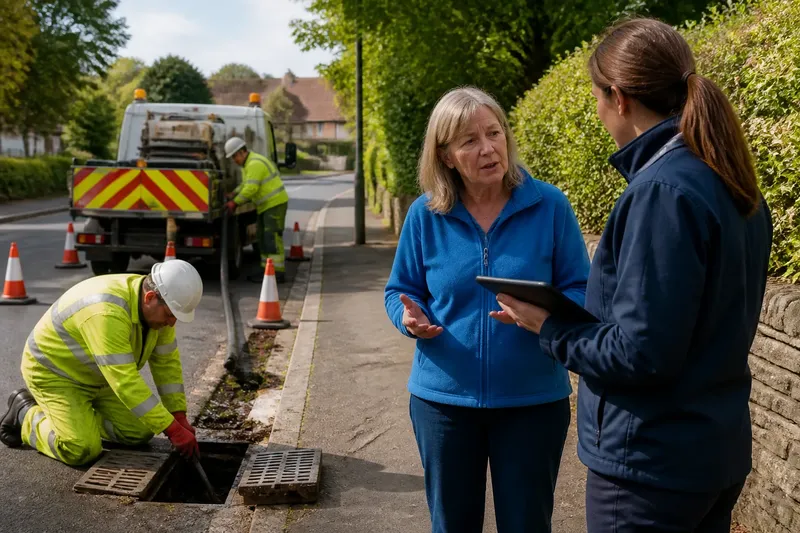
Say you live beside a muddy county footpath, and an agenda report asks a committee to consider whether drainage options should be explored. The report does not ask members to authorise repairs. The minutes then request a site assessment and a report on possible work.
Your next search is for a later paper about that assessment, not for a construction decision. Imagine that the later report describes two options and asks the authorised body to choose whether to proceed with one. If the minutes record a choice subject to landowner consent, the resulting position is specific: an option has been selected for further progress, while consent remains outstanding. That tells you both what changed and what has not happened yet.
To keep the trail clear, write down the initial request, the task assigned at each meeting and any condition attached to the latest action. Use the council’s own wording rather than shortening “assess options” to “approve repairs”.
Questions about follow-up papers?
How can I tell whether a paper asks for action?
Look for the requested action near the end of the report and compare it with the agenda description. If the paper is for information only, it may not invite a decision at that meeting.
What should I search for after a deferral?
Search the reason given for the deferral, the item title and any named officer or service. If the minutes give no next step, ask the council clerk or democratic services team what follow-up was recorded.
Why might a later paper use a different title?
A follow-up may focus on a particular task, such as a site assessment or consultation, rather than repeat the original subject line. Compare its purpose and background with the earlier minutes to see whether it answers the same request.
What if no follow-up appears online?
The work may still be underway, may have moved to another body or may be recorded in a different document. Ask democratic services which record or team holds the next-action update, giving them the item title and meeting date.
Ask a precise question
When the trail goes quiet, give the council the meeting date and item title, then ask: “What follow-up action was recorded for this item, and where can I find its update?” That question is narrow enough to distinguish an outstanding task from a decision already made.
For a county meeting proposal, the main search phrase is less important than the action written into each paper. Follow that action from one record to the next, and you can describe the position accurately even when the original idea is still being worked through.